This post contains affiliate links, which means I may receive a small commission, at no cost to you, if you make a purchase through a link.
You did everything right today.
You slept seven hours. You drank your water. You even skipped the afternoon vending machine run.
And yet — your face is puffy. Your belly feels bloated. You snapped at your phone for buzzing. And by 3pm you were face-deep in a bag of chips you didn’t even want.
That’s not a willpower problem. That’s cortisol — your body’s stress hormone — running the show.
Here’s what almost no wellness article tells you: what you eat directly controls how much cortisol your body produces. The right foods can quiet that hormonal alarm system within days. The wrong ones keep it screaming all day long.
These are the 12 foods that lower cortisol levels — backed by research, easy to find at any grocery store, and powerful enough to actually change how you feel.
What High Cortisol Actually Does to Your Body
Before the list, let’s be clear about what you’re fighting.
Cortisol isn’t evil. It’s designed to save your life — spike when there’s danger, then drop when the threat passes. But modern life keeps the threat signal switched on 24/7. Work deadlines. Toxic news cycles. Poor sleep. Processed food. Relationship stress.
When cortisol stays elevated for weeks, your body starts doing strange, frustrating things:
- Fat stores around your belly and lower back (cortisol literally signals your body to hold fat there)
- Your face puffs up — especially around the jaw and under your eyes
- You crave sugar and salty carbs at night (cortisol hijacks your hunger hormones)
- You feel wired at 11pm but exhausted at 8am
- Skin breaks out. Digestion slows. Hair thins.
Sound familiar? Then keep reading.
The 12 Best Foods That Lower Cortisol Levels Naturally
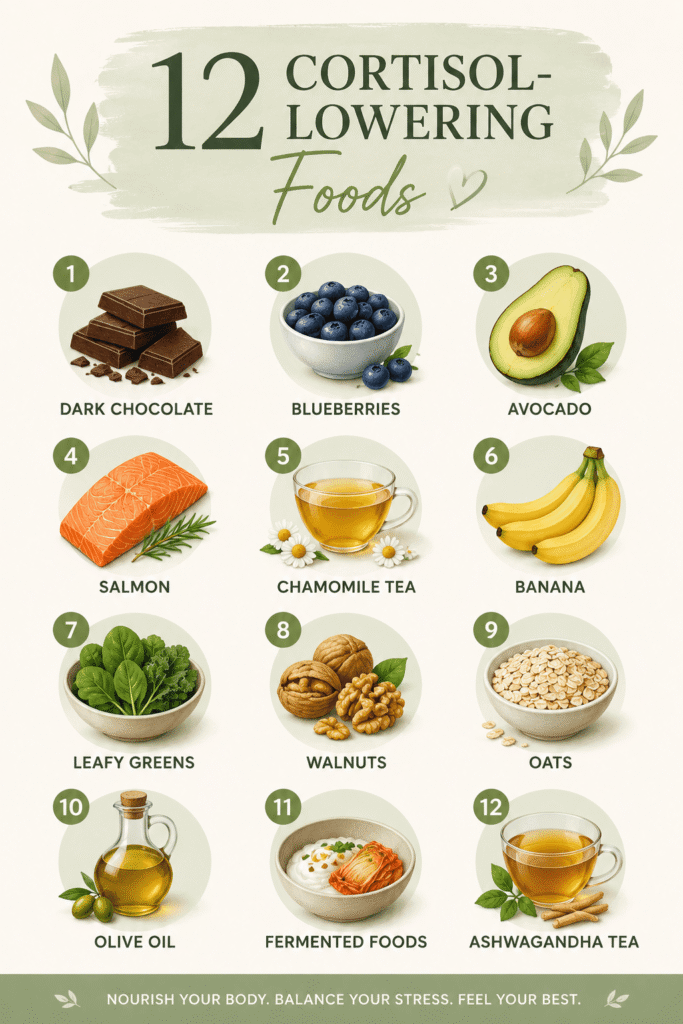
1. Dark Chocolate (70%+ Cacao)
This is not a joke, and yes, it counts as health food — when you pick the right kind.
Research published in the Journal of Proteome Research found that people who ate 40g of dark chocolate daily for two weeks had measurably lower cortisol and adrenaline levels. The key compounds are flavanols — antioxidants that reduce oxidative stress and calm the HPA axis (the brain-adrenal feedback system that regulates cortisol).
How to use it: 1–2 squares of 70%+ dark chocolate in the afternoon instead of your usual sugary snack.
2. Blueberries
Small berry. Massive cortisol impact.
Blueberries are dense in anthocyanins — plant compounds that reduce inflammation and lower the oxidative stress that keeps cortisol elevated. They also support serotonin production, which directly counters the anxiety that spikes cortisol in the first place.
How to use it: A handful in your morning oats or blended into a smoothie.
3. Avocado
Avocados are rich in potassium and healthy monounsaturated fats — both of which support healthy blood pressure and reduce the cardiovascular stress response that triggers cortisol. One study found that people with higher potassium intake had significantly lower cortisol output during stress tests.
Bonus: the healthy fats in avocado slow glucose absorption, keeping blood sugar stable and preventing the cortisol spikes that come with sugar crashes.
How to use it: Half an avocado with eggs in the morning is one of the most cortisol-stable breakfasts you can eat.
4. Fatty Fish (Salmon, Mackerel, Sardines)
Omega-3 fatty acids are among the most well-researched nutrients for cortisol reduction. A study in Psychosomatic Medicine found that participants who supplemented with omega-3s had significantly lower cortisol levels after stress exposure than those who didn’t.
Fatty fish is also rich in vitamin D, which plays a direct role in regulating the adrenal glands — the glands that produce cortisol.
How to use it: Aim for two servings of fatty fish per week. Canned sardines are the most affordable option and just as effective.
5. Chamomile Tea
Chamomile contains apigenin — a flavonoid that binds to GABA receptors in the brain, the same receptors that anti-anxiety medications target (minus the side effects). Lower anxiety = lower cortisol trigger. It also reduces the inflammatory markers that keep cortisol chronically elevated.
How to use it: One cup 30 minutes before bed. This single habit has a compounding effect — better sleep means lower morning cortisol, which means better energy all day.
6. Bananas
Underrated cortisol fighter. Bananas provide potassium, magnesium, and vitamin B6 — all three are nutrients that get depleted fast when you’re stressed. B6 in particular is essential for producing serotonin and GABA, the calming neurotransmitters that naturally lower cortisol.
How to use it: Pre-workout or as a mid-morning snack before you’ve had a chance to stress-eat something worse.
7. Dark Leafy Greens (Spinach, Swiss Chard, Kale)
Dark greens are one of the richest sources of magnesium in the food supply — and magnesium deficiency is directly linked to elevated cortisol. Research suggests that up to 68% of Americans are deficient in magnesium. If you’re chronically stressed and fatigued, low magnesium is often the hidden driver.
Spinach in particular is also high in vitamin C, which has been shown to blunt the cortisol response to acute stress.
How to use it: A handful of spinach in a morning smoothie adds zero taste and maximum cortisol protection.

8. Walnuts
Walnuts are the only nut with significant plant-based omega-3s (ALA), plus they contain melatonin and serotonin precursors that regulate the sleep-stress cycle. Several studies have shown that regular walnut consumption is associated with lower perceived stress and improved mood markers.
How to use it: A small handful as an afternoon snack — pair with a square of dark chocolate for a double cortisol-lowering combo.
9. Oats
Complex carbohydrates stimulate serotonin production without the blood sugar spike of simple sugars. Oats specifically contain beta-glucan, a type of fiber that has been shown to improve the gut-brain axis — the communication system between your gut microbiome and your brain that influences cortisol regulation.
Oats also keep you full longer, which prevents the hunger-driven cortisol spikes that come with skipping meals.
How to use it: Steel-cut or rolled oats in the morning, not instant packets (which spike blood sugar).
10. Extra Virgin Olive Oil
Olive oil is rich in oleocanthal, a compound with anti-inflammatory effects comparable to ibuprofen. Since chronic inflammation is both a cause and a consequence of high cortisol, reducing it breaks the cycle. Studies on Mediterranean diet adherents — who consume olive oil daily — consistently show lower cortisol and inflammation markers compared to Western diet consumers.
How to use it: Drizzle generously over salads, vegetables, and eggs. Don’t cook with it at high heat — that destroys the beneficial compounds.
11. Fermented Foods (Greek Yogurt, Kimchi, Kefir)
Your gut and your brain are in constant conversation. When your gut microbiome is out of balance, it sends distress signals that elevate cortisol. Fermented foods replenish the beneficial bacteria that produce GABA and short-chain fatty acids — both of which directly calm the stress response.
A UCLA study found that women who ate fermented dairy twice daily for four weeks had measurably reduced stress reactivity compared to the control group.
How to use it: Full-fat Greek yogurt with berries in the morning is one of the most cortisol-protective breakfasts on this list.
12. Ashwagandha Tea (or Supplement)
Ashwagandha is an adaptogenic herb — meaning it literally helps your body adapt to stress by modulating the HPA axis. Multiple double-blind studies have shown cortisol reductions of 14–30% in participants who took ashwagandha extract consistently for 60 days.
It’s available as a tea, capsule, or powder. If you’re dealing with chronic stress, elevated cortisol face, or adrenal fatigue symptoms, this is the most powerful single addition you can make beyond food.
How to use it: Ashwagandha tea in the evening, or a supplement with your dinner. Start with a low dose and build up.
The Cortisol Foods to Avoid (These Undo Everything)
Eating the right foods helps. But if you’re still regularly eating these, you’re working against yourself:
- Sugar and refined carbs — blood sugar crashes trigger cortisol spikes. Every time.
- Caffeine after noon — caffeine raises cortisol directly. A late afternoon coffee is a late afternoon cortisol dose.
- Alcohol — disrupts sleep architecture and elevates morning cortisol significantly.
- Ultra-processed snacks — the vegetable oils and additives trigger gut inflammation, which feeds back into elevated cortisol.
- Skipping meals — fasting when you’re already stressed drives cortisol higher. (Timed eating done correctly is different — more on that below.)
The Cortisol-Lowering Protocol That Actually Works
Food is powerful. But if you want to genuinely reset your cortisol levels — not just manage symptoms day-to-day — you need a structured approach that combines what you eat with when you eat it.
This is where intermittent fasting done correctly becomes a game-changer for cortisol specifically. When your eating window aligns with your natural cortisol rhythm (higher in the morning, lower at night), you stop feeding the cycle that keeps cortisol elevated. The result: flatter stomach, less face puffiness, better sleep, and cravings that actually go quiet.
⭐ Recommended: Eat Stop Eat — The Cortisol-Smart Fasting Protocol
Created by nutritionist Brad Pilon, Eat Stop Eat is specifically designed around the hormonal science of cortisol and fat storage. It’s not crash dieting — it’s a research-backed eating schedule that works with your body’s natural cortisol rhythm to shrink stress belly, reduce inflammation, and restore energy without giving up the foods you love.
Unlike generic intermittent fasting guides, Eat Stop Eat accounts for the stress response — making it one of the few fasting protocols that doesn’t spike cortisol in the process.
→ Learn More About Eat Stop Eat Here
⭐ Recommended: The Smoothie Diet — The Easiest Way to Get These Foods Daily
Getting 12 cortisol-lowering foods into your daily routine sounds great on paper. In practice, it takes planning. The Smoothie Diet by Drew Sgoutas solves this with 36 done-for-you smoothie recipes built around exactly the kinds of nutrient-dense whole foods shown to reduce cortisol — leafy greens, berries, healthy fats, and adaptogens.
It’s a 21-day program, but most people report noticeable improvements in energy, bloating, and face puffiness within the first 5 days. A practical, sustainable way to eat for cortisol balance without meal prepping for hours.
→ See The Smoothie Diet Program Here
Start With Just Three
You don’t need to overhaul your entire diet this week.
Pick three foods from this list that you genuinely like. Add them into your next three days of eating. Notice how you feel — your energy levels, your afternoon cravings, your face when you look in the mirror after a week.
The cortisol-food connection is one of those things that seems abstract until you actually experience what eating differently does to your body. Most people notice a difference within 5–7 days of consistent changes. Not a dramatic transformation — but a quieter, less-reactive version of themselves. Less puffiness. Less 3pm crash. Less reaching for food you didn’t even want.
That’s your baseline shifting. And it starts with what’s on your plate.
Frequently Asked Questions
How quickly do foods that lower cortisol levels actually work?
Some effects are immediate — chamomile tea’s calming effect is noticeable within 30–60 minutes. Dietary changes that reduce chronic cortisol typically show measurable results within 1–3 weeks of consistent eating.
Can food alone fix high cortisol?
Food is one of the most powerful levers you have — but it works best alongside adequate sleep (7–8 hours), stress management, and exercise. Think of cortisol-lowering foods as the foundation, not the entire house.
What is the single best food to lower cortisol?
If you had to pick one: dark leafy greens for their magnesium content. Magnesium deficiency is the most common nutritional driver of elevated cortisol, and leafy greens are the easiest, most versatile way to correct it daily.
Does coffee raise cortisol?
Yes — caffeine directly stimulates cortisol release. One morning cup is generally fine. But multiple coffees, or coffee after 1pm, keeps cortisol elevated through the afternoon and disrupts the natural evening drop that should happen.
Related posts you’ll love: