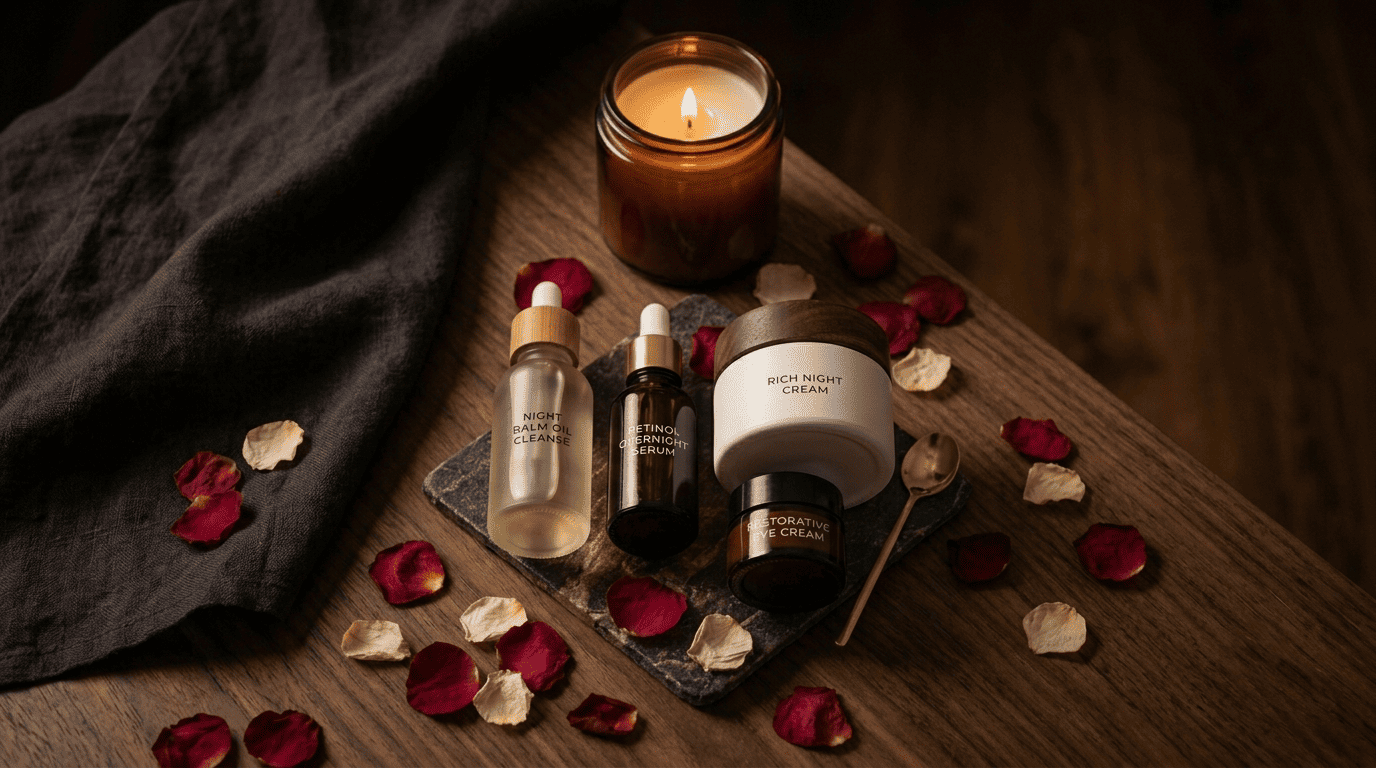
The perfect skin care routine isn’t complicated — but most women are getting it wrong.
You’ve tried the serums. You’ve done the sheet masks. You’ve followed the 10-step Korean routine for three weeks straight.
And yet — your skin still isn’t where you want it to be.
Maybe it’s dull. Maybe it’s breaking out in places it never did before. Maybe it’s dry and oily at the same time, which somehow makes no sense but here you are. Or maybe you just look tired, no matter how much sleep you get.
Here’s the truth nobody in the beauty industry wants to say out loud: the perfect skin care routine isn’t about adding more products. It’s about doing the right things in the right order — and fixing what’s happening underneath.
This guide gives you exactly that. A complete, science-backed skin care routine built for women in their 20s and 30s — morning, evening, and the inner work that makes all of it actually stick.
Let’s get into it.
Why Most Skin Care Routines Don’t Work
Before we build your perfect routine, let’s talk about why the one you’re currently using probably isn’t delivering.
Problem 1: Too many products, too little patience. The average woman uses 12 skincare products a day. Most of them are layered on top of each other in the wrong order, at the wrong time, with incompatible ingredients that cancel each other out. Vitamin C and niacinamide. Retinol and AHAs. Benzoyl peroxide and everything else. The combination is doing more harm than good.
Problem 2: You’re treating symptoms, not causes. Breakouts, dullness, and premature lines are almost always a signal — not a surface problem. Treating them with more topicals is like putting a plaster over a leak. The water is still coming in.
Problem 3: Your skin barrier is damaged. Over-exfoliating, harsh cleansers, hot showers, inconsistent SPF use — these erode your skin barrier over time. When your barrier is compromised, nothing absorbs properly, everything irritates, and your skin swings between oily and flaky depending on the day.
The good news? All three of these are fixable. And your perfect routine starts with understanding them.
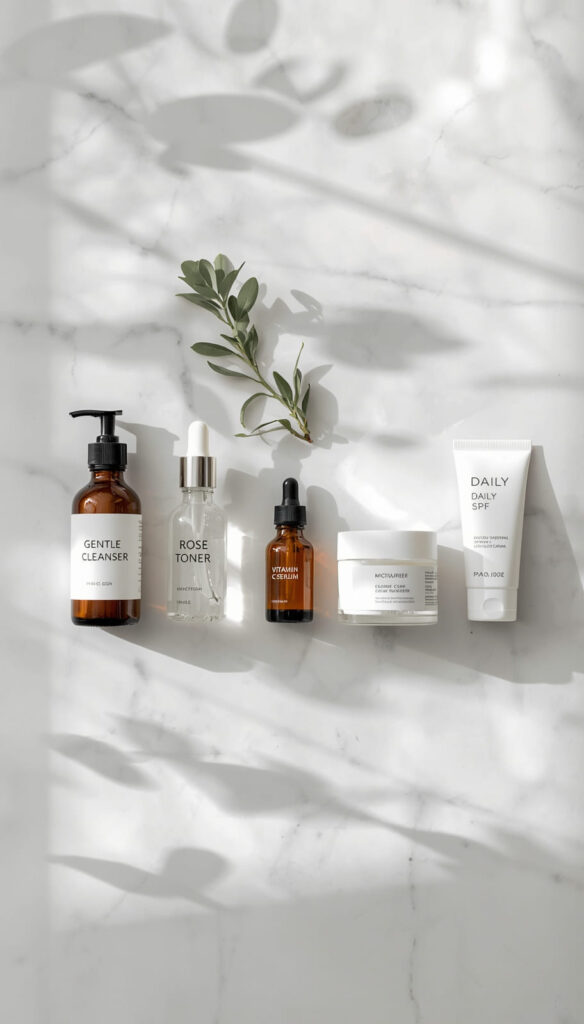
The Perfect Morning Skin Care Routine (Step by Step)
Your morning routine has one main job: protect. You’re defending your skin against UV damage, pollution, stress, and the day ahead. Keep it clean and simple.
Step 1 — Gentle Cleanser (60 seconds)
In the morning, your skin doesn’t need a deep cleanse — it needs a gentle rinse to remove overnight oils and product residue without stripping your natural moisture barrier.
What to look for: A low-pH, fragrance-free gel or cream cleanser. Ingredients like ceramides, glycerin, or aloe vera are your friends here.
What to avoid: Foaming cleansers with sulphates, anything that leaves your skin feeling “squeaky clean” (that feeling = barrier damage), and anything with artificial fragrance.
The rule: If your cleanser burns, tingles, or leaves your face tight — it’s too harsh. Your skin should feel comfortable and slightly dewy after cleansing, never dry.
Step 2 — Vitamin C Serum (the non-negotiable)
If there’s one product that belongs in every woman’s morning routine in her 20s and 30s, it’s vitamin C. Full stop.
Vitamin C (L-ascorbic acid) is a clinically proven antioxidant that does three things nothing else can do in the morning:
- Neutralises free radical damage from UV and pollution
- Brightens dull, uneven skin tone over time
- Boosts collagen production — the protein your skin loses every year after 25
What to look for: A stable vitamin C formula at 10–20% concentration. Vitamin C degrades fast — store it away from light and heat, and replace it every 3 months.
Pro tip: Apply it to slightly damp skin for better absorption. Give it 60 seconds to fully absorb before the next step.
Step 3 — Moisturiser (non-negotiable, yes even if you’re oily)
Oily skin is almost always dehydrated skin trying to compensate for lack of moisture. When you skip moisturiser, your skin produces more oil. When you moisturise properly, oil production balances out within 2–4 weeks.
For dry or combination skin: A hyaluronic acid-based cream or gel-cream. Hyaluronic acid holds 1,000 times its weight in water — it’s the most effective hydrating ingredient available.
For oily or acne-prone skin: A lightweight, oil-free gel moisturiser with niacinamide (pore-minimising, oil-controlling, anti-inflammatory).
Step 4 — SPF 30 or Higher (the most important step of all)
Up to 90% of visible skin ageing is caused by UV exposure. Not genetics. Not stress. Not diet. Sun damage. And it starts in your 20s even when you can’t see it yet.
SPF is not optional. It’s not just for summer. It’s not just for the beach. It is the single highest-ROI step in any skin care routine — bar none.
What to look for: A broad-spectrum SPF 30 minimum (SPF 50 preferred). Mineral sunscreens (zinc oxide, titanium dioxide) are gentler for sensitive and acne-prone skin. Chemical sunscreens are lighter for daily wear under makeup.
Reapply every 2 hours if you’re spending time outdoors.
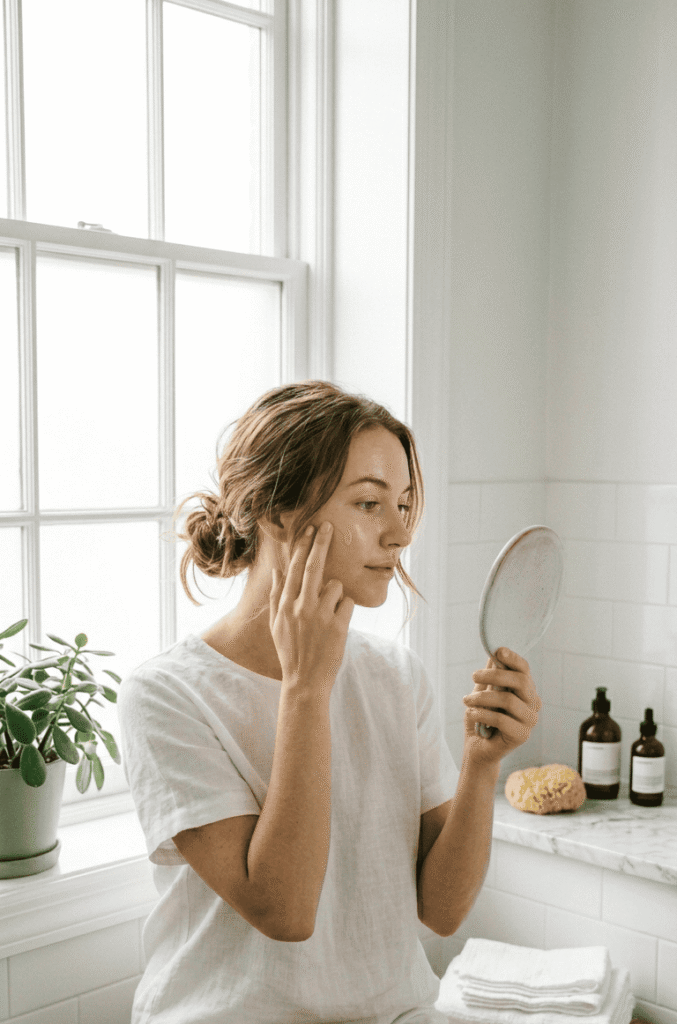
The Perfect Evening Skin Care Routine (Step by Step)
Your evening routine has the opposite job to your morning one: repair. While you sleep, your skin goes into active regeneration mode — cell turnover speeds up, collagen synthesis increases, and repair mechanisms kick in. Your job is to feed that process.
Step 1 — Double Cleanse (the game-changer most women skip)
At night, one cleanse isn’t enough. Here’s why: your first cleanser removes makeup, sunscreen, and surface oil. Your second cleanser actually cleans your skin. Skip the first step and you’re rubbing SPF and makeup deeper into your pores all night.
Double cleanse method:
- First cleanse: Oil cleanser or micellar water to dissolve makeup and SPF
- Second cleanse: Your regular gentle cleanser to clean the skin itself
This single change improves the effectiveness of everything you apply after it by up to 40%.
Step 2 — Exfoliate (2–3 times per week only)
Exfoliation removes dead skin cells, unclogs pores, improves texture, and allows your serums to actually penetrate rather than sit on top of dead skin. But over-exfoliation is one of the most common causes of a damaged skin barrier.
Chemical exfoliants (AHAs and BHAs) are superior to physical scrubs for most skin types:
- AHAs (glycolic, lactic acid): Best for dull skin, uneven texture, and hyperpigmentation
- BHAs (salicylic acid): Best for acne-prone and oily skin — oil-soluble so they get inside pores
The rule: Never use a chemical exfoliant on the same night as retinol. And never use both on consecutive nights until your skin is used to each one individually.
Step 3 — Treatment Serum (target your specific concern)
This is where you personalise. After cleansing and optional exfoliation, apply your targeted treatment serum while skin is clean and slightly damp.
- For anti-ageing: Retinol (start at 0.025%, build slowly over months)
- For hyperpigmentation: Niacinamide 10% + tranexamic acid
- For breakouts: Benzoyl peroxide 2.5% or salicylic acid serum (not on the same night as retinol)
- For barrier repair: Centella asiatica (cica), panthenol, or ceramide serum
Step 4 — Rich Moisturiser or Night Cream
At night, you can go heavier than your morning moisturiser. Look for ingredients like:
- Peptides — signal your skin to produce more collagen
- Ceramides — rebuild your skin barrier
- Squalane — deeply hydrates without clogging pores
- Shea butter — locks in moisture overnight
Apply to slightly damp skin and let it fully absorb before sleeping.
Step 5 — Eye Cream (optional but worthwhile in your 30s)
The skin around your eyes is the thinnest on your body — and it shows ageing first. A dedicated eye cream with caffeine (for puffiness), peptides (for fine lines), or retinol (for crow’s feet) can make a visible difference over time.
Apply with your ring finger using light tapping motions — never drag or pull.
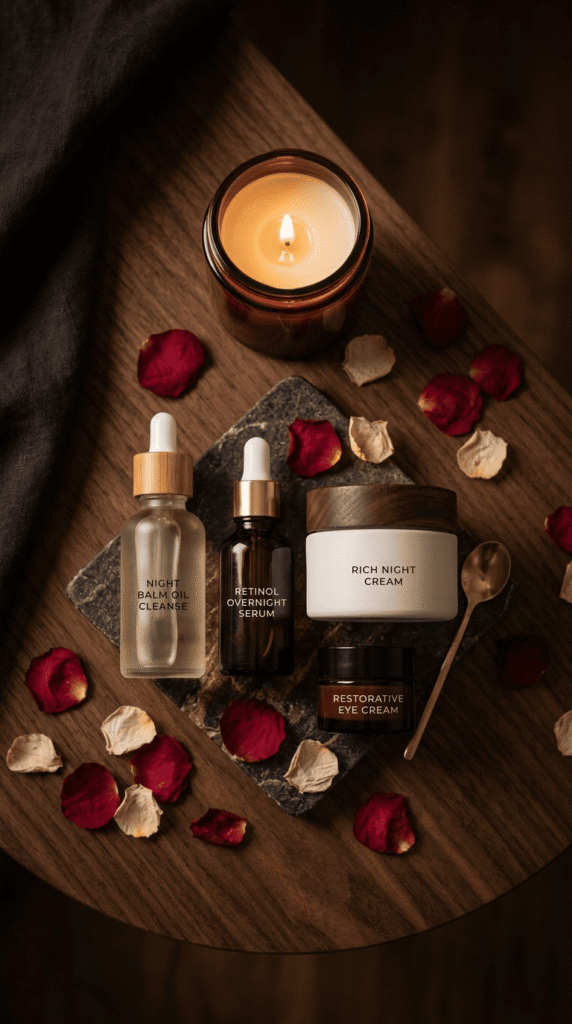
The Weekly Extras That Make the Difference
Your daily routine is the foundation. These weekly additions take your results from “decent” to “people asking what you’re doing.”
Face mask (1–2x per week): A hydrating sheet mask or a clay mask (for oily skin) gives your skin a concentrated dose of actives. Use it after cleansing before your serum.
Facial massage (3–5x per week): Two minutes of upward strokes with your fingertips or a gua sha tool improves lymphatic drainage, reduces puffiness, and boosts circulation. Do it while applying your moisturiser.
Silk pillowcase: Cotton pillowcases create friction and absorb moisture from your skin overnight. Silk reduces both. It also reduces hair breakage if that’s a concern. This is a small change with a surprisingly visible impact.
Neck and chest: Whatever you apply to your face, apply it to your neck and chest too. These areas age just as visibly as your face but get skipped by 90% of women until the damage is done.
The Inside-Out Truth About Glowing Skin
Here’s what no skincare brand wants to put in their ad: you cannot out-moisturise a bad diet, chronic stress, or poor sleep.
Your skin is a reflection of your internal health. And if what’s happening inside is inflamed, dehydrated, or depleted — no serum on earth is going to give you the glow you’re chasing.
What Your Skin Needs From the Inside
Hydration: Your skin cells are 70% water. When you’re dehydrated, skin looks dull, fine lines are more visible, and your barrier function drops. Drink 2–3 litres of water daily. Add electrolytes if you exercise.
Omega-3 fatty acids: Found in salmon, sardines, walnuts, and chia seeds. Omega-3s maintain your skin’s lipid barrier, reduce inflammatory breakouts, and keep skin supple and plump from within. This is the #1 dietary change for skin health.
Antioxidants: Berries, leafy greens, green tea, and dark chocolate neutralise free radical damage — the same damage that causes premature ageing. Eat the rainbow, not just the beige.
Collagen-supporting nutrients: Vitamin C (from food, not just skincare), zinc, and protein are the raw materials your body uses to produce collagen. Without adequate protein intake, no retinol or peptide cream can compensate.
Gut health: A disrupted gut microbiome is directly linked to inflammatory skin conditions — acne, eczema, rosacea, and dullness. The gut-skin axis is real and the research on it is growing every year.
Sleep: During deep sleep, your body releases human growth hormone which triggers cell repair throughout the body — including skin. Chronic sleep deprivation increases cortisol, which breaks down collagen and triggers breakouts. No eye cream fixes that.
Ingredients That Actually Work (And What to Skip)
The skincare industry spends billions confusing you. Here’s a clean, honest breakdown.
Ingredients With Solid Science Behind Them
| Ingredient | What It Does | Best For |
|---|---|---|
| Retinol | Speeds cell turnover, boosts collagen, reduces lines | Anti-ageing, acne, texture |
| Vitamin C | Antioxidant, brightening, collagen synthesis | Dullness, dark spots, prevention |
| Niacinamide | Pore-minimising, oil control, barrier repair | Oily, acne-prone, sensitive skin |
| Hyaluronic Acid | Deep hydration, plumping | All skin types |
| AHAs/BHAs | Exfoliation, unclogging pores, texture | Acne, dullness, uneven texture |
| Ceramides | Barrier repair, moisture retention | Dry, sensitive, damaged skin |
| Peptides | Collagen signalling, firming | Anti-ageing, mature skin |
| SPF | UV protection, ageing prevention | Everyone, every day |
Ingredients to Approach With Caution
- Fragrance (synthetic) — The #1 cause of contact dermatitis and sensitivity. If your skin is reactive, go fragrance-free across everything.
- Alcohol denat — Temporarily mattifies skin but damages the barrier over time. Common in cheap toners.
- Essential oils — Natural doesn’t mean gentle. Citrus oils, peppermint, and lavender are common irritants hiding in “natural” products.

Your Complete Skin Care Routine At a Glance
☀️ Morning Routine
- Gentle cleanser
- Vitamin C serum
- Moisturiser (hyaluronic acid or niacinamide-based)
- SPF 30–50
🌙 Evening Routine
- Oil cleanser / micellar water (first cleanse)
- Gentle cleanser (second cleanse)
- Exfoliant — AHA or BHA (2–3x per week only)
- Treatment serum — retinol / niacinamide / targeted active
- Rich moisturiser or night cream
- Eye cream (optional)
📅 Weekly Additions
- Face mask 1–2x
- Gua sha or facial massage 3–5x
- Silk pillowcase every night
🥗 Daily Inner Routine
- 2–3 litres of water
- Omega-3 rich foods (salmon, walnuts, chia)
- Antioxidant-rich diet (berries, greens, green tea)
- 7–9 hours sleep
How Long Before You See Results?
This is the question everyone wants answered — and the honest answer is: it depends on what you’re treating. But here’s a realistic general timeline:
- Week 1–2: Skin feels more hydrated, less tight or reactive
- Week 3–4: Texture begins to smooth, pores look smaller, skin tone more even
- Month 2: Brightness improves noticeably, breakouts reduce in frequency
- Month 3: Retinol effects kick in — skin visibly firmer and clearer
- Month 6: The before/after you’d actually want to photograph
Skincare is a long game. The women with genuinely beautiful skin in their 40s and 50s aren’t the ones who found a miracle product — they’re the ones who built a consistent routine in their 20s and 30s and stuck to it.
You’re starting at exactly the right time.
The Golden Rules of Skin Care (Save These)
✅ Consistency beats complexity. Four products used every day beats twelve products used occasionally.
✅ Introduce one new product at a time. Wait two weeks before adding the next. That way, if your skin reacts, you know exactly what caused it.
✅ Patch test everything. Apply a small amount to your inner arm for 48 hours before using on your face. Every time. No exceptions.
✅ SPF is not optional. We’ve said it. We’ll keep saying it.
✅ Your skin barrier is everything. If your skin is reactive, red, or constantly breaking out — stop adding actives and focus on barrier repair for 4–6 weeks first. Ceramides, hyaluronic acid, gentle cleanser, SPF. That’s it.
✅ Drink your water. The most unglamorous skincare advice is still the most effective.
Final Thoughts
The perfect skin care routine isn’t the most expensive one. It’s not the longest one. And it’s definitely not the one with the most steps.
It’s the one you actually do — every morning, every evening — with the right ingredients in the right order, supported by what you eat, how you sleep, and how well you manage your stress.
Your skin in your 20s and 30s is still incredibly responsive. The habits you build right now will show up on your face in your 40s. The investment is worth it.
Start simple. Stay consistent. And remember — the glow you’re chasing isn’t just on the surface.
Save this post for later and share it with a friend who needs a skin reset. 📌